Certified Organic Skincare: What You’re Actually Paying For
“Organic” is one of the most commercially exploited words in skincare. It appears on packaging without certification, in marketing copy without definition, and in ingredient lists where a single organic botanical buried at 0.01% concentration qualifies a product for organic-adjacent branding. The word has been stretched far enough that it now functions primarily as aesthetic positioning rather than functional information — which makes the distinction between “organic” as a claim and certified organic as a verifiable standard more important than most consumers realize.
Certification changes the category entirely. A certified organic ingredient is not simply one that sounds natural or avoids a short list of synthetic additives. It is an ingredient that has been grown, processed, and handled according to audited agricultural and manufacturing standards — with documentation verifying that at every stage of production, from soil to extraction, no prohibited substances were introduced and no shortcuts were taken.
Understanding what that standard actually requires — and what it means for the ingredient that ends up on your skin — is the difference between paying for a label and paying for something that performs differently because of how it was made.
What certification actually requires
Organic certification for cosmetic ingredients is governed by agricultural and processing standards — in Europe primarily through EU Regulation 2018/848, with additional cosmetic-specific frameworks through bodies like COSMOS (Cosmetic Organic Standard), Ecocert, and the Soil Association. These standards specify what can and cannot be used at every stage of ingredient production.
At the agricultural level, certification prohibits or tightly restricts three categories of inputs that conventional farming relies on:
Synthetic pesticides and herbicides.
Conventional botanical farming uses synthetic agrochemicals to control pests, disease, and competing vegetation. Many of these compounds are lipophilic — they accumulate in plant tissue and are not fully removed by standard washing or extraction processes. Residues persist into the finished extract. Certified organic farming prohibits synthetic pesticides entirely, relying instead on approved natural alternatives and integrated pest management. The extract that results contains what the plant produced — not what was applied to it.
Synthetic fertilizers and soil conditioners.
Nitrogen-based synthetic fertilizers accelerate plant growth at the cost of soil microbiome diversity and, in many cases, the concentration of secondary metabolites — the bioactive compounds that make botanical extracts functional in skincare. Plants grown in nutrient-managed organic soil, developing at their natural rate, tend to produce higher concentrations of the flavonoids, polyphenols, and terpenes that drive the clinical properties of ingredients like chamomile, calendula, and rose. Organic certification is partly a proxy for bioactive density in a way that conventional sourcing cannot replicate at scale.
Prohibited processing methods and additives.
Certification extends beyond the farm into extraction and processing. Certified organic standards restrict which solvents can be used in extraction, prohibit irradiation, and limit synthetic additives that can be introduced during processing. This matters because conventional extraction often uses petrochemical solvents that leave trace residues in the finished ingredient — residues that end up in the formula and on the skin. Certified organic extraction uses approved, clean-process methods that preserve bioactive integrity without introducing contaminants.
The bioactive argument — why organic ingredients perform differently
The claim that certified organic botanical extracts contain higher concentrations of bioactive compounds than their conventionally grown equivalents is not marketing — it is a documented agricultural phenomenon with a specific biological explanation. Secondary metabolites — the chemical compounds plants produce for defense, pollinator attraction, and environmental adaptation — are synthesized in response to stress. Plants under mild environmental pressure, competing naturally for nutrients and defending themselves without synthetic chemical support, produce more of them.
Synthetic fertilizers and pesticides reduce that pressure. A conventionally farmed chamomile plant grows faster, produces more yield per hectare, and contains lower concentrations of alpha-bisabolol and apigenin than a plant grown organically in managed soil. The yield advantage of conventional farming is real. The bioactive advantage of organic farming is also real — and in skincare formulation, where the functional activity of an extract depends on the concentration of specific compounds, it is the more relevant metric.
This is why the sourcing decision for botanical actives is not separable from the formulation decision. A formula built around chamomile extract at functional concentration is a different formula depending on whether that extract came from certified organic or conventional farming — not because one is philosophically preferable, but because the extract itself contains different amounts of the compounds doing the work.
What “natural” and “clean” don’t tell you
“Natural” has no regulatory definition in cosmetics in most markets. It can be applied to any product by any brand without external verification or auditing. A formula containing 95% synthetic ingredients and 5% plant-derived components can be marketed as natural without any legal obstacle. The word communicates aesthetic preference, not formulation standard.
“Clean beauty” is similarly unregulated. It typically signals the absence of a brand-defined list of ingredients — parabens, sulfates, synthetic fragrance — but carries no requirement for how included ingredients were sourced, processed, or verified. Two products can both be “clean” while one uses certified organic botanical extracts at functional concentration and the other uses conventionally farmed, solvent-extracted trace botanicals buried in a synthetic base.
Certification is the only standard in this category that requires external verification. A certified organic claim on a cosmetic ingredient means an auditing body has reviewed the supply chain, inspected the farming operation, verified the processing methods, and issued documentation confirming compliance. It is not self-reported. It is not based on a brand’s internal ingredient philosophy. It is audited.
The cost structure of certified organic formulation
Certified organic ingredients cost more than their conventional equivalents — consistently and significantly. The reasons are structural: lower yield per hectare, longer crop cycles, higher labor intensity, additional compliance and auditing costs, and a smaller total supply chain relative to conventional agricultural volume. These are not inefficiencies that scale away. They are the cost of the standard itself.
For a brand formulating with certified organic botanicals at concentrations where they function — not at trace levels that qualify the label without meaningfully affecting the formula — that cost is material. It affects unit economics in a way that makes certified organic formulation genuinely difficult to sustain at mass-market price points without either reducing concentration below functional threshold or absorbing a margin structure that most volume-driven brands will not accept.
This is what a premium price point in certified organic skincare actually reflects — when the brand has made the formulation decisions honestly. Not packaging. Not marketing. Not the word “organic” on the front of the bottle. The cost of sourcing ingredients that were grown correctly, processed cleanly, verified externally, and included at concentrations where they perform the function the formula claims they perform.
How to verify what you’re buying
The practical test for whether a certified organic claim is meaningful requires looking at two things simultaneously: the presence of a verifiable certification body and the position of certified organic ingredients in the INCI list.
A legitimate certification — COSMOS, Ecocert, Soil Association, USDA Organic — means an audited supply chain and a standard that was externally verified. A brand claiming organic without naming a certification body is making an unverified assertion. The certification body is the accountability mechanism. Without it, the claim carries no more weight than “natural.”
INCI list position confirms concentration. Certified organic rose water listed as the third ingredient after water and a surfactant is present at a meaningful level. Certified organic chamomile extract listed after fragrance and preservatives is present at trace concentration — verified in its sourcing, functionally irrelevant in its quantity. Both can carry the same organic certification on their individual ingredient specification sheets. Only their position in the formula tells you which one is actually doing something.
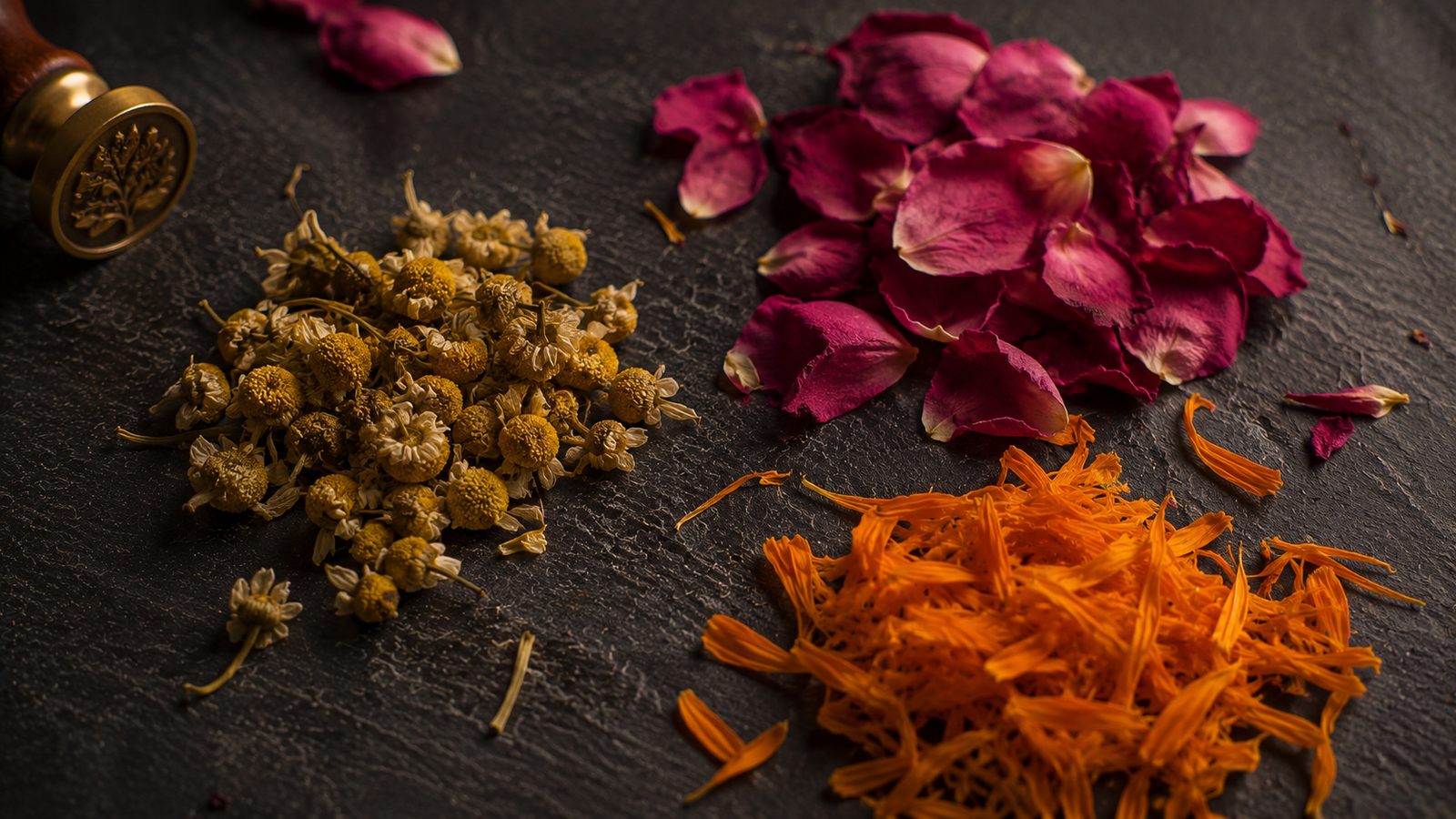
In Ember, the certified organic botanicals — rose water, chamomile extract, calendula extract — are sourced from certified organic farming and formulated at concentrations where their presence changes how the formula performs. The certification is verifiable. The INCI list position reflects meaningful concentration. And the price reflects the cost of making both of those things true simultaneously.
Organic as a label is noise. Organic as a verified, concentrated, functional formulation decision is something else entirely.
Ember — Botanical Foaming Cleanser
Certified organic rose water. Chamomile. Calendula. No sulfates.
Shop EmberREXODIA — Precision skincare. No compromise.